
Mold remediation in Pittsburgh, PA
Mold remediation in Pittsburgh means removing the mold-damaged material, cleaning what can stay, and fixing the moisture that fed it. Pennsylvania has no mold license and no state mold rules, so the checks fall to you: the company's state HIC registration, its insurance, a written contract and, in a house built before 1978, lead-safe work.
Your call is connected with an independent local company. Water category: depends on the water that fed it; mold from sewage or flood water starts from category 3.
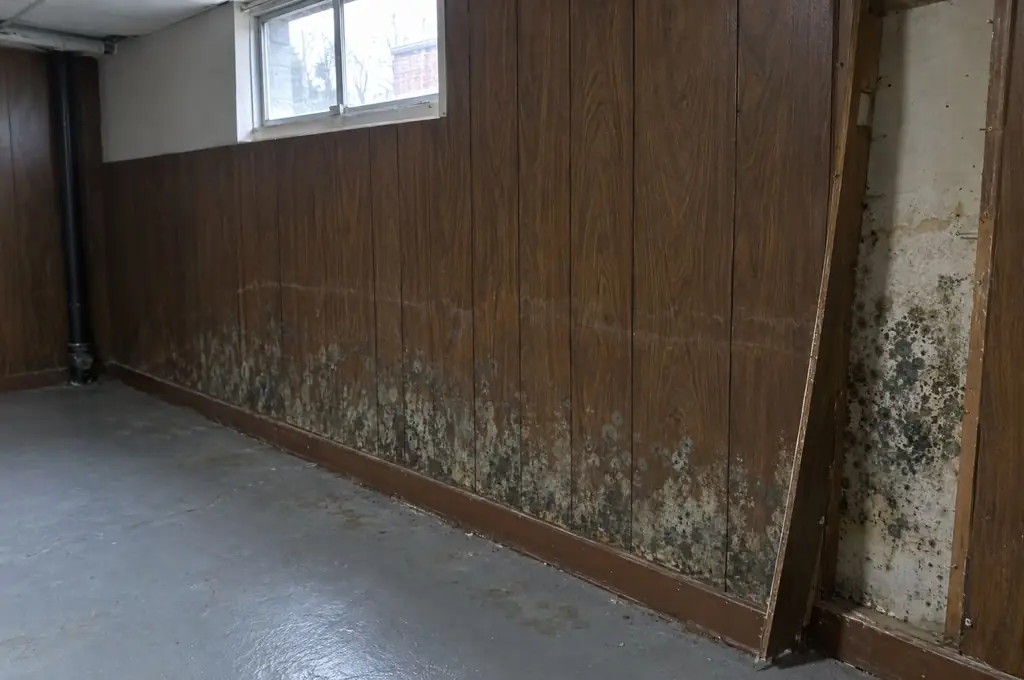
Illustrative photo.
Look first where water may have sat out of sight: behind basement paneling after a floor drain backed up, inside a plaster ceiling under a bathroom, or under carpet pad. Mold you can see is usually less than what's behind the surface, so ask how the company will find the edge of the damage before it quotes the job.
Right now
- 1Stop the water source if you can: a shutoff valve, a towel at a slow drip, a bucket under a ceiling stain.
- 2Don't scrub or dry-brush a large patch. That spreads spores through the house.
- 3If the mold is near a furnace return or ductwork, turn the system fan off until someone looks at it.
- 4Take photos and a short video for your records before anything is moved.
- 5Run a dehumidifier in a damp basement and keep the door to that area shut.
Pittsburgh facts for this problem
Pennsylvania's Department of Health says there are no federal or Pennsylvania state regulations about mold, so the state issues no mold license.
Source: PA Department of Health: What You Should Know About Mold (Sept 2026).
The same fact sheet says Pennsylvania has no state law about a landlord's duties to prevent or repair mold.
Source: PA Department of Health: What You Should Know About Mold (Sept 2026).
For mold covering more than 10 square feet, or for anyone in the home with asthma, COPD, other health problems or a pregnancy, the Department of Health says to hire a contractor.
Source: PA Department of Health: What You Should Know About Mold (Sept 2026).
Pennsylvania requires home improvement contractors who do $5,000 or more of work a year to register with the Attorney General and to show proof of $50,000 in liability coverage for injuries and $50,000 for property damage.
Source: Home Improvement Consumer Protection Act, Act 132 of 2008 (73 P.S. 517.1 et seq.).
About 83% of the homes in the 20 ZIP codes mostly inside Pittsburgh city limits were built before 1980, according to Census estimates for ACS 5-year 2020-2024.
Source: U.S. Census Bureau, ACS 5-year, tables B25034 and B25035, calculated by Pittsburgh Water Damage & Mold on November 13, 2026.
The EPA's lead rule requires anyone paid to disturb painted surfaces in a home built before 1978 to be certified and trained in lead-safe work.
March 2026 brought 6.40 in. of rain, the wettest March in the Pittsburgh record since 1871; the previous high was 6.10 in. in 1967.
Source: ACIS daily record, Pittsburgh Area record (NWS climate site, kept at Pittsburgh International Airport today), calculated by Pittsburgh Water Damage & Mold on November 13, 2026.
Pennsylvania's Department of Health says there are no federal or state regulations about mold, and no state law on what a landlord must do about it. The state does register home improvement contractors through the Attorney General, so check the HIC number of anyone who will tear out drywall or plaster. In a Pittsburgh house built before 1978, ask about EPA lead-safe certification before painted walls come down.
Sources: PA Department of Health: What You Should Know About Mold (Sept 2026); Home Improvement Consumer Protection Act, Act 132 of 2008 (73 P.S. 517.1 et seq.); EPA: Lead Renovation, Repair and Painting Program
Related on this site: the Pennsylvania contractor license lookup for how to check a company's state registration when there is no mold license, and the home age by ZIP for how old the houses are in each Pittsburgh ZIP.
How the work usually goes
Find the moisture
A moisture meter and, often, a thermal camera show how far water traveled. Mold work that skips this step tends to come back.
Set up containment
Plastic sheeting closes off the work area, and an air scrubber with a HEPA filter keeps loose spores from reaching the rest of the house.
Remove what can't be cleaned
Moldy drywall, insulation, carpet pad and paneling usually come out. Plaster, framing and concrete are often cleaned instead. In a pre-1978 house, painted surfaces come down with lead-safe methods.
Clean and HEPA-vacuum
Remaining surfaces are cleaned and vacuumed with HEPA equipment, then the area is dried to normal readings.
Fix the cause and check it
The leak, drain or seepage that fed the mold gets fixed, and readings are taken again before walls are closed.
How insurance usually treats it
Mold coverage usually follows the water that caused it. Mold from a sudden covered leak, such as a burst pipe, may be included up to a limit set in the policy. Mold from slow seepage, long-term humidity or flood water is usually excluded. Look for a section on mold, fungi or rot in your policy.
General information, not insurance advice. Your policy decides. See Pennsylvania water damage insurance rules.
What changes the size of the job
- How many square feet of material are affected, including what's hidden behind walls
- Whether the walls are drywall or plaster and lath
- Containment and air scrubbing needed to protect the rest of the house
- Lead-safe work on painted surfaces in a house built before 1978
- Whether ductwork or the furnace is involved
- Repairs after removal, which are often a separate estimate
We don't quote prices. A company measures moisture on site and writes an itemized estimate; the water damage estimator lists what that estimate should include.
Questions people ask
What does mold remediation cost in Pittsburgh?
We don't quote prices. The size of the affected area, plaster versus drywall, containment, lead-safe work in older houses and whether ductwork is involved all change the job. Pennsylvania's home improvement law requires a written contract with the total price or a written starting estimate, so get one before work starts.
Can I clean mold myself in Pittsburgh?
For a small patch, often yes. The EPA says a homeowner can usually handle an area under about 10 square feet. Pennsylvania's Department of Health says to hire a contractor for anything larger, or if someone in the home has asthma, COPD, other health problems or is pregnant.
Is there a mold license in Pennsylvania?
No. The state Department of Health says there are no federal or Pennsylvania regulations about mold. Ask for the company's home improvement contractor registration number, which the Attorney General issues, and its certificate of insurance.
Why does lead matter for mold work in an older Pittsburgh house?
Mold removal often means cutting out painted plaster or trim. The EPA's lead rule requires anyone paid to disturb paint in a home built before 1978 to be certified and to use lead-safe practices, and it recommends homeowners hire a lead-safe certified firm.